A person can last about three days without water. That is why water comes first, before food or flashlights. And you don't need to buy anything special: you already have almost everything at home.
The math: 3 liters per person per day
To drink and cook, plan on about 3 liters (0.8 gallon) per person per day. That is the survival figure in the Sphere Handbook, the international standard for humanitarian aid, which gives 2.5 to 3 liters.
- 1 person, 3 days: 9 liters (2.4 gallons).
- 2 people: 18 liters (4.8 gallons).
- 4 people: 36 liters (9.5 gallons).
- 6 people: 54 liters (14.3 gallons).
If you have room, store more. FEMA, through Ready.gov, asks for at least 1 gallon (3.8 liters) per person per day because it adds hygiene. That is 12 gallons for four people for three days. And don't forget your pets.
What to store it in
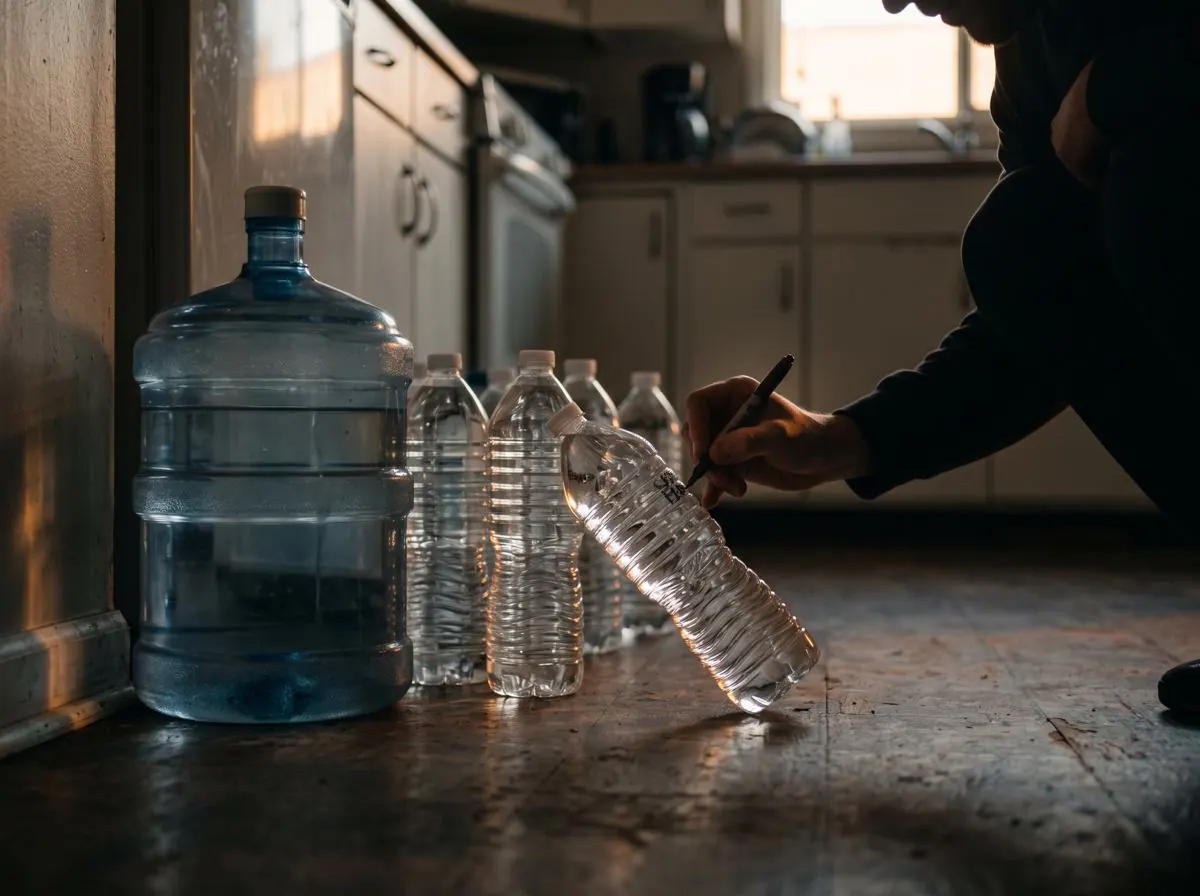
- Soda or water bottles and water jugs, washed with soap and water.
- Sanitize the container: 1 quart (1 liter) of water with 1 teaspoon of unscented bleach. Shake for 30 seconds and empty it.
- Fill it, cap it and write the date on it.
- Keep it somewhere cool and dark, away from gasoline and cleaning products.
Don't use milk or juice containers: the fat and sugar residue never fully washes out and feeds bacteria. Never reuse containers that held bleach, pesticides or gasoline.
How often to replace it
Water you bottled yourself should be replaced every 6 months. Store-bought bottled water lasts until its expiration date as long as it stays sealed.
Don't pour it out: use it to water plants or clean, then refill. To remember, set a phone reminder for six months out on the day you store it.
If the water goes off: where to find more at home
- The water heater. Turn it off, close the water inlet and open the drain valve at the bottom. The water may come out hot.
- The pipes. Close the main valve and open the lowest faucet in the house.
- The toilet tank, the one in the back and not the bowl, only if you don't use colored cleaning tablets.
- Ice from the freezer.
Never drink, not even after boiling: water that smells of gasoline or chemicals, floodwater or radiator water.
How to make water safe if you're not sure
- If it's cloudy, strain it first through a clean cloth.
- Boil it for 1 minute once it reaches a rolling boil. Above 2,000 meters (6,500 feet), 3 minutes.
- If you can't boil it: 8 drops of unscented bleach per gallon (1/8 teaspoon, about 2 drops per liter). Double it if the water is cloudy, then wait 30 minutes.
- With no fire and no bleach: a clear bottle lying in the sun for 6 hours, or 2 days if it's cloudy.
None of these methods removes chemicals or fuel. Don't drink that water.
Three mistakes that make people sick
- Thinking clear water is safe. Germs are invisible.
- Using scented bleach or bleach with additives. Only plain unscented bleach works.
- Putting your hand or a cup inside the container. Pour straight from it or use a clean pitcher.
Start today with what you have: a few full, dated jugs already put you ahead of most people. The water guide has a calculator for your household and step-by-step videos.