HomeStage 2 · Hygiene and sanitationHygiene and sanitation guide
Stage 2 · Hygiene and sanitation guideHygiene: don't let what you can't see make you sick
After a disaster, diarrhea and infections kill silently. Clean hands, an emergency toilet and garbage kept away: that prevents almost everything.
- Hands with soap and water before eating or cooking and after using the toilet.
- Drinking water kept separate from washing water.
- No sewer: a bucket with two bags and soil or ash.
- Garbage in closed bags, away from water and the kitchen.
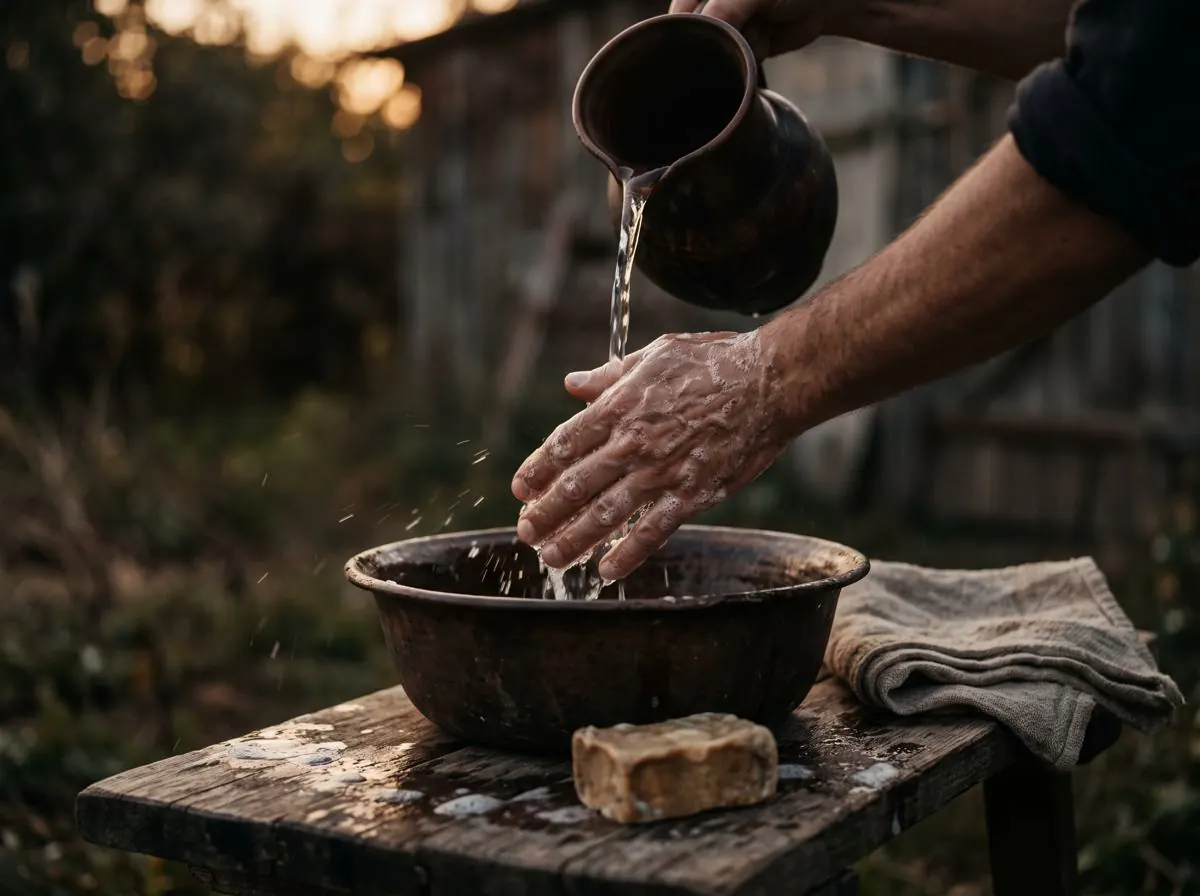
Wash your hands the right way
- Wet and latherPalms, backs, between fingers, nails and thumbs.
- Scrub for at least 20 secondsAs long as it takes to sing "Happy Birthday" twice. The whole wash, 40 to 60 seconds.
- Rinse and dryWith a clean towel or in the air. Not on your clothes.
With little water: a jug with a spigot or a bottle with a hole in the cap. Alcohol-based sanitizer if there is no water, 20 to 30 seconds.
Sanitizer doesn't work if your hands have dirt or grease on them: wash them first.
An emergency toilet without water
- A bucket and two bagsA bucket with a lid and two heavy garbage bags, one inside the other.
- Cover it every timeWith dry soil, ash, sawdust or sand. It removes the smell and keeps flies away.
- Close it when half fullTie it tightly and store it separately, away from water and the kitchen.
- Soap next to itWater and soap next to the bucket to wash up afterwards.
Don't use the toilet if you don't know whether the sewer is working: sewage can back up into your home.
Garbage, cleaning and wounds
- Garbage: closed bags, in a fixed spot, away from water and food. If it stays for days, bury it or cover it.
- Surfaces: one tablespoon of bleach in a liter of water for the table and where you cook.
- Small wounds: wash them with clean water and soap and cover them. If they get red, hot or have pus, get medical care.
- Feminine hygiene and diapers: store pads, diapers and bags to throw them away.
Diarrhea: oral rehydration salts and plenty of safe water. If there is blood, a high fever or it is a baby, get medical help.
Check what you already have
0 of 5 · Saved only on this device.
- Using the toilet without knowing whether the sewer works.
- Washing your hands in the same container where water is stored.
- Leaving garbage near the water or the kitchen.
Sources: WHO · hand hygiene · Sphere Handbook · water and sanitation · IFRC · key preparedness messages