HomeStage 2 · Power and communicationPower and communication guide
Stage 2 · Power and communication guidePower and communication: a plan before the blackout
When the grid goes down, phones stop working and nobody knows a number by heart. Whoever agreed on a plan, has a radio and keeps batteries charged wins.
The only thing you need to remember
- Key phone numbers on paper: nobody knows them by heart.
- If the network is overloaded, send text messages: they use less than a call.
- A contact in another city who gets news from everyone.
- A battery-powered or hand-crank radio and a charged power bank.
Step 1 of 4 · Family plan
Agree on a plan before it happens
- Write down the phone numbersOn a card for everyone's wallet and another in the go-bag.
- Choose two meeting pointsOne near home and one outside the neighborhood.
- Choose an out-of-area contactA relative in another city who lets everyone know.
- Agree on a short message"I'm OK, heading to point 2." Practice it once.
If you get separated in a major crisis, the Red Cross family links service helps you find each other.
Step 2 of 4 · First hour
The power went out: the first hour
- Light up and checkA flashlight, not candles. See whether the outage is just your home or the whole street.
- UnplugDevices and appliances, so they aren't damaged when the power comes back.
- Save batteryBrightness to minimum, airplane mode if you aren't expecting messages. Fill up water if your pump is electric.
- Stay informedWith the radio. The authorities say how long it may last.
Don't open the refrigerator unless you have to: it stays cold for about 4 hours; a full freezer, about 48.
Step 3 of 4 · Gear
Radio, batteries and charging
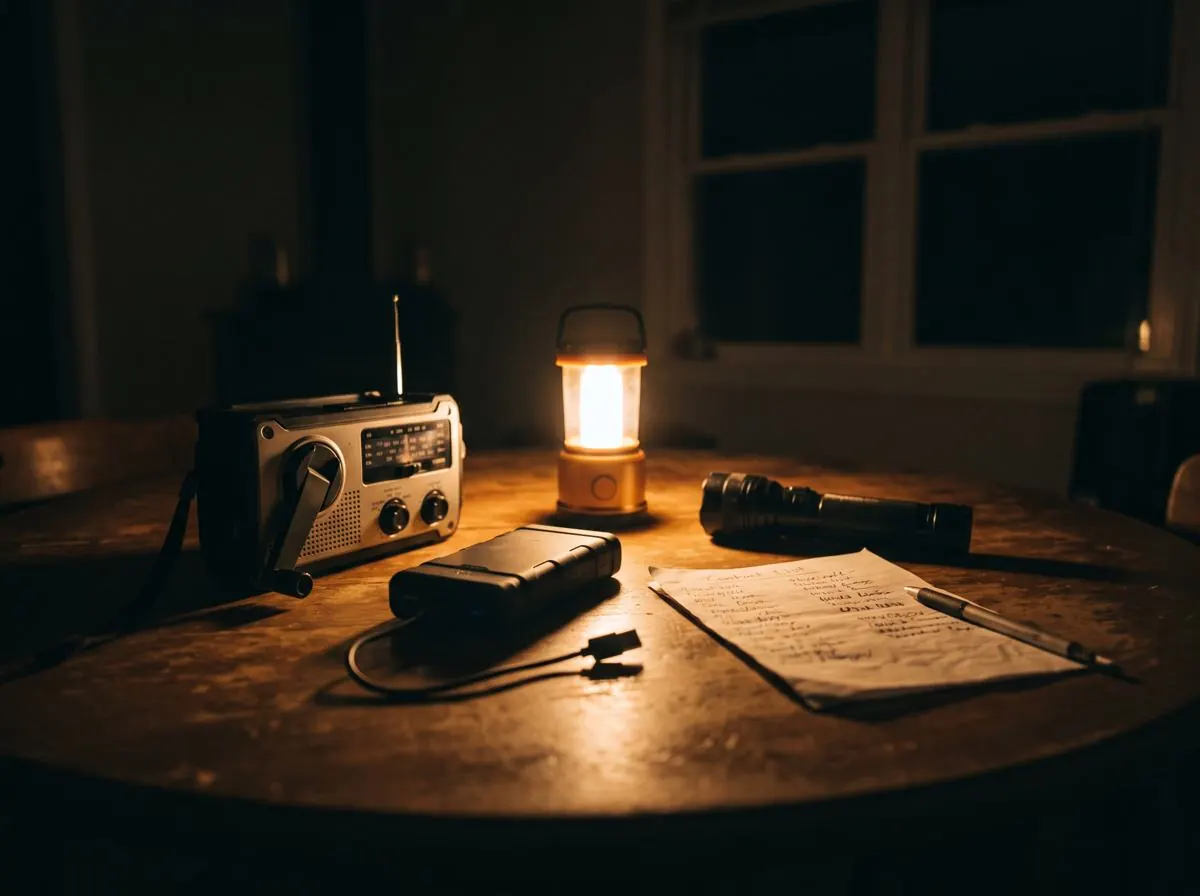
To stay informedRadioBattery, hand-crank or solar. Tune in to the local station.
For your phonePower bankAlways charged. A 10,000 mAh one gives about two charges.
No outletCharge in the carWith the engine running and outdoors, never in a closed garage.
- Check once a month that the power bank is charged.
- Store the radio with batteries in it and spares.
- Keep some cash: without power, card terminals and ATMs don't work.
Step 4 of 4 · Check
Check what you already have
0 of 5 · Saved only on this device.
Three common mistakes
- Calling over and over: you overload the network that emergency services need.
- Relying on your phone for everything: without battery you lose contacts, maps and flashlight.
- Charging your phone in the car inside a closed garage.
Sources: IFRC · family safety plan · ICRC · restoring family links · CDC · what to do in a power outage