HomeStage 3 · Your own waterOwn water guide
Stage 3 · Own water guideYour own water: rain and a good filter
Stored water runs out. A roof, a gutter and a tank collect hundreds of liters in a single rain, and a homemade filter leaves it ready to chlorinate or boil.
The only thing you need to remember
- 1 mm of rain on 1 m² of roof = 1 liter.
- Divert the first flush of each rain: it washes the roof.
- A covered tank, in the shade and out of the light: that way algae and mosquitoes don't grow.
- Filtered is not enough: chlorinate or boil it before drinking.
Step 1 of 4 · Collect the rain
From the roof to the tank
- Clean roofMetal sheet, tile or concrete without lead paint. Remove leaves and dust before the rainy season.
- Gutter and downspoutCarries the water from the edge of the roof through a pipe to the tank.
- First-flush diverterA pipe that fills first with the dirty water and lets the clean water through.
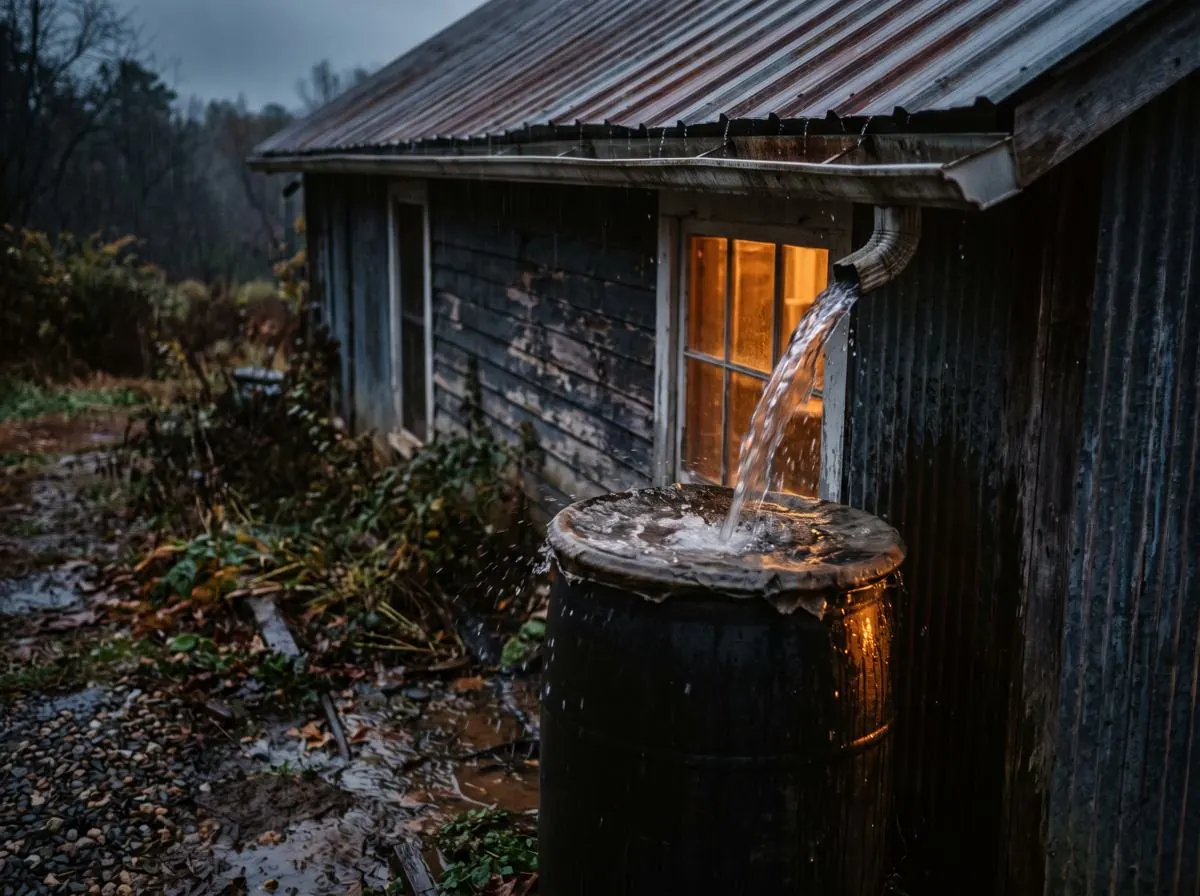
- Closed tankWith a lid, a screen on the inlet and a tap above the bottom so you don't draw sediment.
How much you collect: a 50 m² (540 sq ft) roof with 10 mm of rain gives about 400 liters (105 gal).
Step 2 of 4 · Filter it
A biosand filter made at home
- The containerA barrel or tall bucket with an outlet pipe that runs up the outside.
- The layersFrom bottom to top: coarse gravel, fine gravel and fine washed sand, always with water on top.
- The living layerIn 2 or 3 weeks a layer of good microbes forms on top and traps the harmful ones.
- Use it every dayPour the water through a diffuser so you don't stir up the sand.
The filter removes most of the dirt and germs, not all of them. Afterwards, chlorinate or boil.
Step 3 of 4 · Other sources
Spring, well or river: protect them
The bestSpringEnclose the spring outlet and cover it so animals can't get in.
If you have to digWellWith a high rim and a lid. Draw water with your own clean bucket.
The last resortRiver or streamTake water upstream of towns and livestock pens. Always treat it.
Latrines and livestock pens more than 30 meters (100 ft) from any water source, and never uphill from it.
- Keep drinking water separate from irrigation water.
- Check for cloudy water after heavy rains.
Step 4 of 4 · Check
Check what you already have
0 of 5 · Saved only on this device.
Three common mistakes
- Drinking rainwater without treating it because "it's clean."
- Leaving the tank uncovered or in the sun.
- Digging the latrine near the well.
Sources: Isla Urbana · CAWST · biosand filter · Sphere Handbook · water and sanitation