HomeStage 2 · FoodFood guide
Stage 2 · Food guideFood: store what you can eat without cooking
In an emergency there may be no stores, power or gas. The supplies that work are the ones you can eat with little water and no fire. This is about storing food; growing it comes in Stage 3.
- 2,100 calories per person per day. Start with 3 days and work up to 2 weeks.
- Store what you already eat that doesn't need a refrigerator.
- New in the back, old in front. Check dates every month.
- The base of your supplies: tsampa, roasted barley flour you eat with just water.
Food that doesn't need fire
- Lasting energyTsampa, oats, crackers, sugar or honey and peanut butter.
- ProteinCanned tuna, sardines, beans and chickpeas, powdered milk.
- FatOil, nuts, peanuts and seeds: lots of energy in little space.
- Morale boostersSalt, coffee, chocolate and something the kids like.
Don't forget a manual can opener, a spoon per person and extra water for preparing food.
Tsampa: the food that comes already cooked
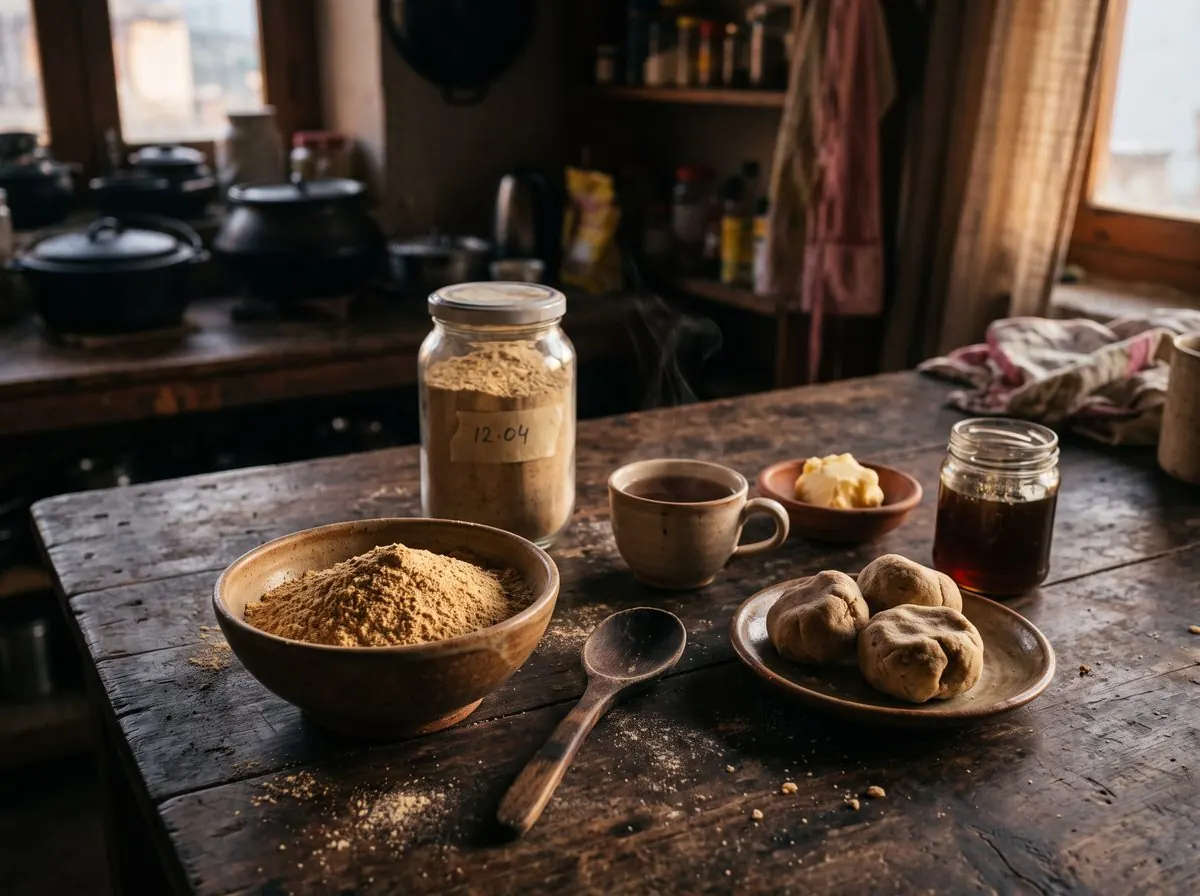
It is roasted barley flour. In Tibet it has been eaten for centuries on long journeys and in the cold. Because it is roasted, it is already cooked: you just add liquid.
- Wash and dry the barleyPearl barley from the store. Make sure it is completely dry.
- Toast it in a dry panMedium heat, stirring constantly, until it turns golden and some grains pop. Don't let it burn.
- Grind it fineIn a hand mill, blender or coffee grinder. Let it cool before storing.
How to eat it and how to store it
Half a cup of tsampa (about 60 g), a splash of water, tea or milk, a spoonful of oil, butter or peanut butter, and sugar or honey to taste. Mix with your hand until it forms a soft ball: about 400 calories.
- In tightly sealed jars or bags, dated, in a cool, dry, dark place.
- Use it within 2 or 3 months and make another batch. Whole barley grain, sealed, lasts much longer: toast and grind it in portions.
- If it smells rancid or got damp, throw it out.
Barley contains gluten. If someone has celiac disease, use pinole (toasted, ground corn): it is prepared the same way.
Check what you already have
0 of 5 · Saved only on this device.
- Buying food nobody at home eats.
- Storing only raw rice and beans: without gas or extra water they are useless.
- Leaving supplies on the floor or next to the stove: moisture and heat spoil them.
Sources: Sphere Handbook · food · University of Illinois · food storage · Ready.gov · supply list · Tsampa · what it is and how it is made · Tsampa · nutrition facts