HomeStage 3 · Community and crisis economyCommunity and crisis economy guide
Stage 3 · Community and crisis economy guideCommunity: nobody holds out alone
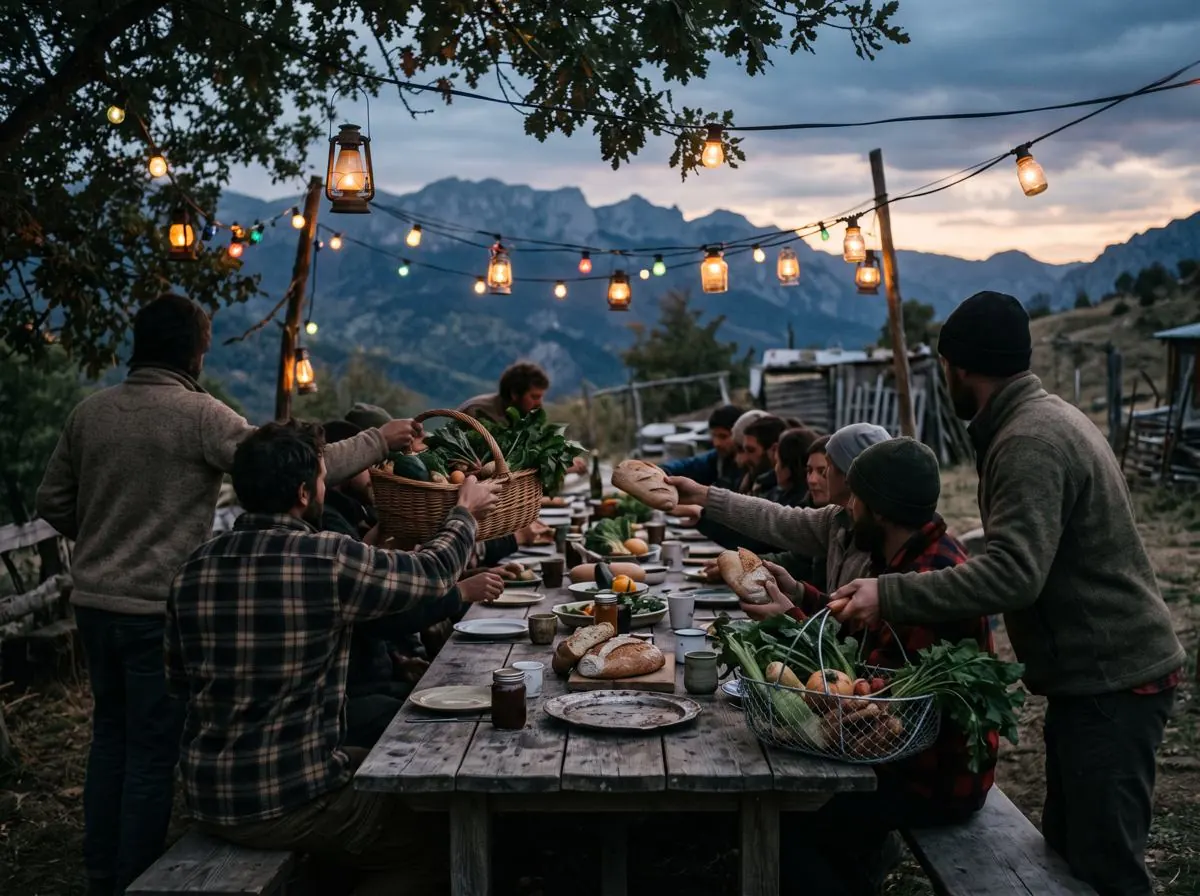
A family on its own can't hold out for long. An organized community shares the work, exchanges what it knows and what it has, and looks after the weakest.
The only thing you need to remember
- Know who knows what and who has what.
- Shifts: water, watch, cooking and kids.
- Without money: barter and a time bank.
- Clear rules from the start, decided together.
Step 1 of 4 · Get organized
A committee with clear tasks
- MeetOnce a week, at the same time, in the same place.
- Take inventoryWho knows first aid, cooks, builds or farms; who has tools, water or a vehicle.
- Assign shiftsWater, watch, communal cooking, care for children and the elderly.
- Choose people in chargeOne person per task and a backup.
Step 2 of 4 · Economy
Exchange without money
Things for thingsBarterFood, seeds, tools and clothing.
Hours for hoursTime bankOne hour of your trade is worth one hour of someone else's.
What is worth the mostIn a crisisWater, food, medicine, salt, soap, batteries and knowing how to repair things.
- Keep some cash in small bills for the first days.
- Record time bank exchanges in a shared notebook.
Step 3 of 4 · Decide together
Clear rules prevent conflicts
- Write them downHow the shared water and food are divided, and what is expected of each person.
- The vulnerable firstChildren, the elderly, the sick and people with disabilities.
- Solve things earlyA small problem gets talked about at the meeting, not left to grow.
- Protect trustPromises are kept; the accounts are open for everyone to see.
Step 4 of 4 · Check
Check what you already have
0 of 5 · Saved only on this device.
Three common mistakes
- Waiting for the crisis to start before organizing.
- Hoarding in secret while the neighbors have nothing.
- Not writing down the agreements.
Sources: IFRC · family safety plan · IFRC · key preparedness messages